
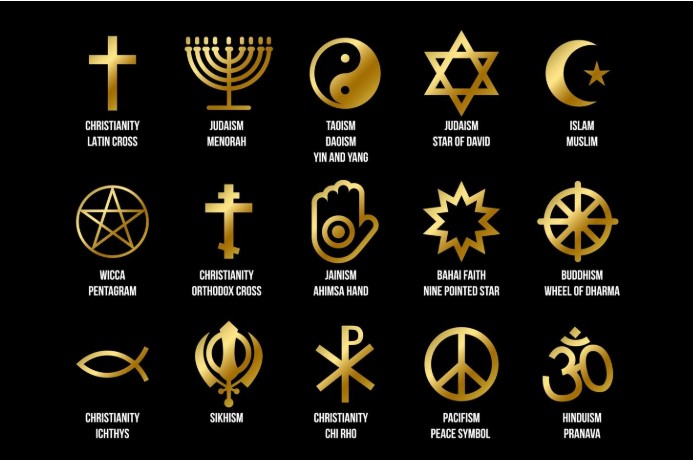
Religion means different things to different people. For some, it is a foundation of daily life. For others, it shapes culture, traditions, and values. For example, Christians believe in one God in three persons (Father, Son, Holy Spirit) called the Holy Trinity. Muslims believe that Jesus was sent down as a prophet, and Jewish people believe in one God. They do not believe that Jesus was the Messiah. Many believe the Messiah is still to come in the future. These religions have different points of view on God and Jesus and what they believe in. Religion has played a role in some historical conflicts, but it has also brought people and communities together in meaningful ways. At Liberty, some students are interested in learning about beliefs beyond their own. Junior Bryce Crawford shared that while his faith is very important to him, he believes understanding other religions helps build respect and stronger connections between people. Among the many religions practiced around the world, Christianity, Judaism, and Islam are three major faiths that shape the beliefs of billions of people, including students here at our school.
Christianity is one of the largest religions in the world and centers on the belief in one God expressed in three persons: the Father, the Son (Jesus Christ), and the Holy Spirit. Christians believe that Jesus is the Son of God who came to Earth, taught about love and forgiveness, and died on the cross for our sins. The Bible serves as Christianity’s holy book and guides believers in their faith and daily lives.
Over time, Christianity has developed into many different denominations, including Catholic, Orthodox, Baptist, and Lutheran churches. While these groups may differ in certain traditions or interpretations, they share the same beliefs about Jesus and the importance of faith.
Many Christians believe in the concepts of heaven and hell, viewing heaven as eternal life with God and hell as being away from Him. Prayer, worship, reading the Bible, and living according to Christian teachings are common ways believers practice their faith.
Junior Chloe Dodd shared her perspective saying, “I believe that God has created this world in 7 days and made all creations. I also believe Jesus once walked this world and died on the cross for all of us. I believe in heaven and hell and that there’s something out there after you pass”. People say that they practice praying. But people also practice the way that they talk to
After learning about Christianity, it’s also important to understand Judaism, another major monotheistic religion. In fact, Judaism is one of the oldest religions in the world, dating back nearly 4,000 years.
Jewish people believe in one God and follow teachings found in their holy book, the Torah. A very important part of Judaism is the idea of a covenant, which is a special promise or agreement between God and the Jewish people. This covenant helps guide how they live their lives.
Many Jewish people focus on living a moral life, following commandments, doing good deeds, and helping others. Traditions, family, and community are also very important parts of Jewish life. For many students who practice Judaism, their faith is not just about beliefs, but also about celebrating holidays, spending time with family, and being part of a strong community.
Sophomore, Rowen Laine stated,“We are a lot more accepting than people think and we are not classified by few of the people.”
Islam began in the 7th century in the Arabian Peninsula, in what is now modern-day Saudi Arabia. Muslims believe in one God (Allah) and follow the teachings of the Prophet Muhammad, who they believe received revelations from God that were recorded in the Qur’an, Islam’s holy book.
Today, Islam is one of the largest religions in the world, with over a billion followers across Asia, Africa, Europe, and beyond. Freshman Noor Ismael shared, “People may not know that some studies show it’s the fastest-growing religion in the world.”
Muslim people worship in Mosques and their holy book is the Quran. One of the central foundations of Islam is the Five Pillars of Islam, which guide daily religious practice. These include declaring faith, praying five times a day, giving to charity, fasting during the month of Ramadan, and making a pilgrimage to Mecca at least once if able.
Like other major religions, Islam has different branches, the two largest being Sunni and Shia, which developed from historical differences in leadership after the death of the Prophet Muhammad.
While religion plays a central role in many students’ lives, others may not practice any religion at all. At Liberty High School, students come from diverse faith backgrounds, and learning about one another’s beliefs can promote understanding and respect.







Carlitos Cruz • Feb 27, 2026 at 7:40 pm
Good job, Avery.