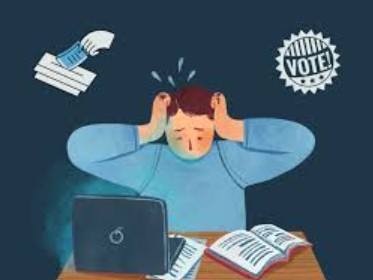

Patriot Press has now done 3 articles on AI, and while all 3 had different angles, focuses, and authors, they all shared the common opinion that most AI-generated content is bad. This article is somewhat of a sequel to my AI article, since there was a lot I wanted to talk about but didn’t know how to explain without bloating the article and going off-topic. I hope to explain the downsides of generating AI content, and the potential consequences of using AI images. But first, we need to quickly go over how AI actually works.
Learning how AI works is a little hard, but generally, AI models are just machine learning algorithms that are trained off large databases of pre-made work. Basically, they’re a really advanced version of the autocomplete on your phone. It seems inoffensive enough, so what’s so bad about AI, and why shouldn’t you use it?
In my opinion, the most upfront reason for not using AI content is just because people don’t like AI. People often describe AI as “soulless” and “uncanny”, and it doesn’t help that it’s being pushed in everyone’s faces. Some people even take offense to AI content, mainly environmentalists, artists, and activists.
Beyond the satisfaction of others, AI images fail at personal satisfaction, too. When you make something, you’ll feel proud of the final product. After all, it’s your creation; you made it with your own blood, sweat, and tears. When you AI-generate something, you don’t feel proud of it because all you did was ask for an output, like ordering food at a restaurant.
Rarely left out of the conversation is the environmental and economic impacts of AI. While these are definitely a problem related to AI, it’s more on the company rather than the AI model. Companies are behind a lot of the problems with today’s AI, even beyond images. By generating images with AI, you’re supporting the actions of the company behind the AI model, and by extension, the economic and environmental problems caused by said company.
Above the problems with pollution, reception, profit and result, AI-generated content is legally questionable. Because many mainstream AI models are trained off of copyrighted material without clear permission, you could argue that using an AI image generated by one of these models for commercial use is in some way an infringement of copyright. For the same reasons, you can’t “own” an AI image generated by an infringing AI model. This won’t affect a regular person generating images just for fun, but businesses might get in future legal troubles over using AI-generated promotional material.
Relying on a technology with questionable ethics, legality, and popularity is bad enough on its own, but it’s worse when you take into account that AI might not even be around much longer, or at least it won’t be as omnipresent. With the current economic state AI is in now, it’s not unlikely that the AI market will crash very soon. Once it crashes, all the mainstream AI models will probably either be discontinued or put behind a heavy paywall. By then, human labor will probably be cheaper.
You should hopefully understand the problems I and many others have with AI by now. I focused on AI images, but lots of the things I mentioned go for every other form of AI-generated content. Music, literature, chatbots, and every other medium AI has been shoved into. Even after this, I still have quite a bit to say about AI, but I’d probably need 2 more articles just to keep my thoughts organized.