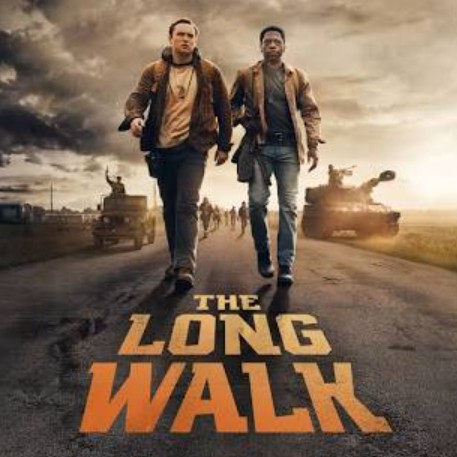
The Long Walk, originally published in 1979 by Stephen King, has long been considered a powerful and haunting novel. With the release of its film adaptation on September 12, 2025, directed by Francis Lawrence, many fans expected the book to remain superior, as is often the case. However, in the case of The Long Walk, the film offers several changes that make the story even more compelling than the original novel.
The Long Walk is about a big event that boys sign up for. In this event, you must walk until the last man stands. You get three warnings, and if you use all your warnings, you get shot. The last man standing is rewarded a large amount of money, and one wish can be granted; it could be anything you want.
The book follows the main characters, who are Peter McFries, Gary Barkovitch, Hank Olson, Arthur Baker, Stebbins, and the Major. In the book, there are 100 boys in the long walk, which is a yearly event where teenage boys 13-18 years old walk at a pace of 4 miles per hour, without breaks. The book follows the main character, Garraty, a teenage boy who signs up for the long walk to avenge his dad, who was killed by the Major. He admittedly becomes friends with McFries, Olson, Baker, while Stebbins just watches around. A boy named Curly gets a charley horse and cannot walk anymore. He gets his three warnings and then gets shot. Everyone is in shock, and many get warnings, one after another. The boys die, and the last three left are Stebbins, McFries, and Garraty. McFries falls asleep while walking and falls into a crowd of people who were watching their final moments. He then gets his “ ticket”. Soon after, Stebbin collapses, and Garraty wins. Instead of taking his prize, he keeps walking; he never stops, and that’s how the book ends.
Now the movie is very different , there are only 50 boys, all over 18, except for Curly, as he snuck in. In the movie, it’s 3 miles per hour to make it more realistic. The first person to die is still Curly, and the order stays the same until the last 3 are left. Stebbins dies first. He is sick the whole movie and basically gives up after a long speech; all that’s left is Garraty and McFries. Mcfries tried to sacrifice himself, but Garraty soon stops him and falls to the ground, getting shot, as Mcfries runs to him, Garraty tells him how he deserves to win as his last words, Mcfries wishes for a gun and shoots the major, the ending is him walking away. The movie ending shows how the characters were more developed and became great friends, and they stayed friends till the end. Garraty’s story and McFries ‘ killing him at the end showed how they were truly friends, but in the book, the ending felt soulless and pointless, as he just kept walking.
In the movie, there are only 50 characters. They combined them. Olson never had a wife in the book, but in the movie, they combined him with another character named Scammer, who had a pregnant wife. They took away a very small detail about Stebbins. In the book, they mentioned his purple pants a lot, and they didn’t add them in the movie for unknown reasons, which made some viewers upset. They also changed the ending quite a lot. I personally think the movie’s ending was way better. As the whole movie, you expect Garraty to win, but instead McFries does and kills the Major for him, it’s a nice, sad, but heart-warming twist in the storyline. Stebbins is also the Major’s son, which in the book makes him sound like he’s lying or believes it to be true, but it’s not. In the movie, it’s genuinely like he’s the Major’s son, which is a story I like a lot. I personally like the movie way better than the book because the endings were better, the characters were more developed, and I was more attached to the characters.
Overall, The Long Walk film adaptation succeeds in enhancing the story by delivering stronger character development, a more focused plot, and a more satisfying ending. While the original novel remains a classic, the movie proves that, in some cases, an adaptation can improve upon its source material. For both longtime fans and new audiences, the film offers a compelling and emotionally resonant experience that stands on its own.