JROTC began in 1916 with the passage of the National Defense Act of 1916. The act, which started on July 11, 1916, officially established the Reserve Officers’ Training Corps. The short name for it is ROTC, and authorized to create Junior ROTC. JROTC programs in high schools are allowing the program to help teens take leadership, citizenship service, and personal responsibility across thousands of high schools, and JROTC is motivating young people to be better citizens. While JROTC has military background, its mission extends far beyond preparing students for military careers.
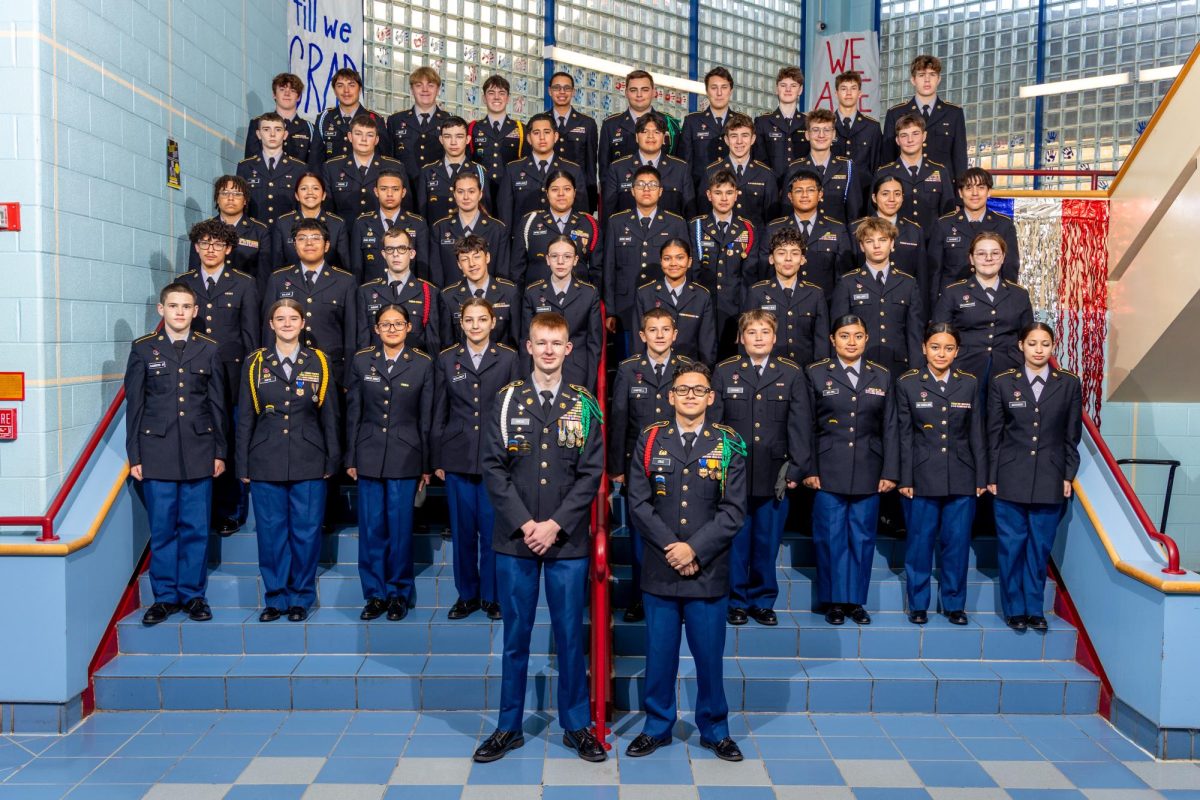
Today, JROTC programs operate in high schools across all 50 states, offering students opportunities to develop discipline, teamwork, and leadership skills. Through training, community service, and academic instruction, the program encourages students to become responsible citizens and confident leaders, regardless of whether they plan to pursue military service. Liberty High School’s JROTC program is led by Colonel John O’Sullivan and Sergeant David Williams. As the only JROTC program in Fauquier County Public Schools, it also serves students from Fauquier High School and Kettle Run High School, who travel to Liberty to participate in the military science classes.
Students join JROTC for many different reasons. Some are interested in learning about the military, while others are drawn to the leadership opportunities the program provides. Senior and JROTC member, Darren Kilgore, has wanted to join the Army since he was young. “When I was in 7th grade, I always saw people in uniform and having fun. I thought they looked cool and I wanted to join the army when I got older,” states Kilgore.
For many students, the benefits of JROTC extend beyond titles or awards. Junior and JROTC member Scarlett Mortenson has achieved many things during her time with the program. For example, Mortenson was promoted to Battalion Commander this year. According to Mortenson, she’s achieved even more personally. “It was not any trophy or tangible award that I received. It was the shift in my confidence levels and the gain of my valuable skills in leadership and team building that surpassed any trophies,” explained Mortenson.
While JROTC offers many opportunities, it also comes with challenges. Students are expected to maintain discipline, manage their time effectively, and push themselves both physically and mentally. Mortenson acknowledged that leadership roles can be demanding. “As a leader, I’m constantly questioning whether I made the right decision,” she said. “That uncertainty can be challenging at times.” For Kilgore, it was learning to have confidence in himself.
Despite the obstacles, JROTC helps students by building leadership, character, and life skills through discipline, teamwork, and responsibility, leading to higher graduation rates, better attendance, improved self-confidence, and enhanced college/career readiness in areas like STEM, law enforcement, and management, even if they don’t join the military It provides mentorship and a structured environment for personal growth, focusing on service, fitness, and academic excellence.
According to Geographic and Demographic Representativeness of the Junior Reserve Officers’ Training Corps, JROTC enrollment has increased over the past years; the percentage is 500,000% students joining the program over the past years. JROTC is one of the most effective. programs in America. Some students may feel nervous about joining JROTC due to misconceptions or fear of judgment from others. Junior Scarlett Mortenson stated, “show up, do the work, and put yourself out there.” There are some students who think their friends will make fun of them, and they think it won’t be fun. Senior Darren Kilgore, “Doing things after school is much more fun. Learn new things and enjoy it; don’t let one thing bring you down.”
As JROTC continues to shape students both academically and personally, it remains a program focused on growth, service, and leadership; values that reach far beyond the classroom.