
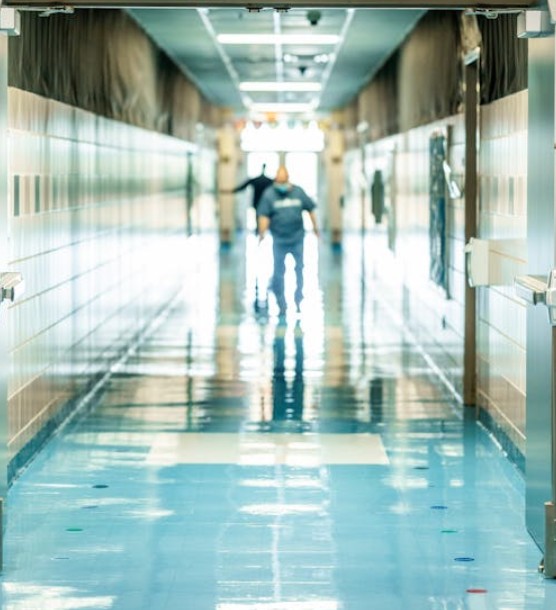
Schools are full of problems—bad lunches, broken Chromebooks, strict teachers—but the most pressing issue of all is the slow commute between classes. Every passing period, hallways become battlegrounds of slow walkers and traffic jams. To combat this growing crisis, a council of elite walkers has come together to share five essential tips for hallway optimization.
To optimize your class travel time, you need to know the best route to your class. You want to minimize distance travelled and steps taken to create the quickest travel time, ideally less than 2 minutes. Take stairs that are closest to your destination rather than closest to you, as that minimizes the time impact of stairs. Other things to consider are foot traffic, testing, and hallway size.
After you’ve thought your route through, you’ll want to know how to go through the halls. Before any obstacles, you want to first think about where you’ll walk. If your class is far, keep in the middle, as you have the most room to pivot and less of a chance to get bumped into by someone exiting a class. If your room is close and to the right, keep to the right of the wall. If your room is on the left, adjust speed to ensure you can enter cleanly and turn into your classroom at a smooth angle. It sounds a little complicated, but that’s only the surface of high-level hallway technique.
Knowing patterns of hallway activity can be crucial to optimization. The most important thing to know is how slow walkers work. Slow walkers will accumulate more as hallway time increases. These slow walkers are often in groups lined up perpendicular to the hallway’s direction, creating a sort of wall. These walls block the side of the hall and cause a “clog”, or an accumulation of people stuck behind slow walkers. The best solution is to stay in the middle of the hall and occasionally drift left.
You won’t only be blocked from front and back. Sometimes, you’ll be blocked by a line from the left or right. Elite Liberty hallway experts call these groups “Sliding Doors”. Avoiding these people is simple if you know how to be calmly assertive. Simply get close up to the line of people and slowly approach. This should cause the line to break a little, giving you an entrance. If a Sliding Door is approaching as you’re about to turn into a classroom, simply adjust speed and pivot to avoid being stalled.
All the things mentioned here have been small, short-lived obstructions, but rarely, a large group of people covering an entire hallway can completely clog a hallway, slowing everyone to a halt. This usually happens during SOL testing, when the SOL hallway is blocked off. When you encounter this, you have no choice but to squeeze past the horde of unfortunate souls who were blocked off from their classes.
Those were the 5 tips given to me by the council. I hope that this groundbreaking article stops the disgusting cycle of crowded hallways and late attendance. After all, lateness is not a victimless crime. If you or a loved one were ever marked tardy due to hallway activity, spread awareness by telling others of the techniques listed in this article.